

There’s something magical about pulling a loaf of blueberry sourdough bread from the oven – that crisp crust giving way to a tangy, slightly sweet interior studded with juicy berries. I’ll never forget my first successful batch, when the scent of warm blueberries and fermented dough filled my tiny apartment kitchen. That moment changed my sourdough game forever.
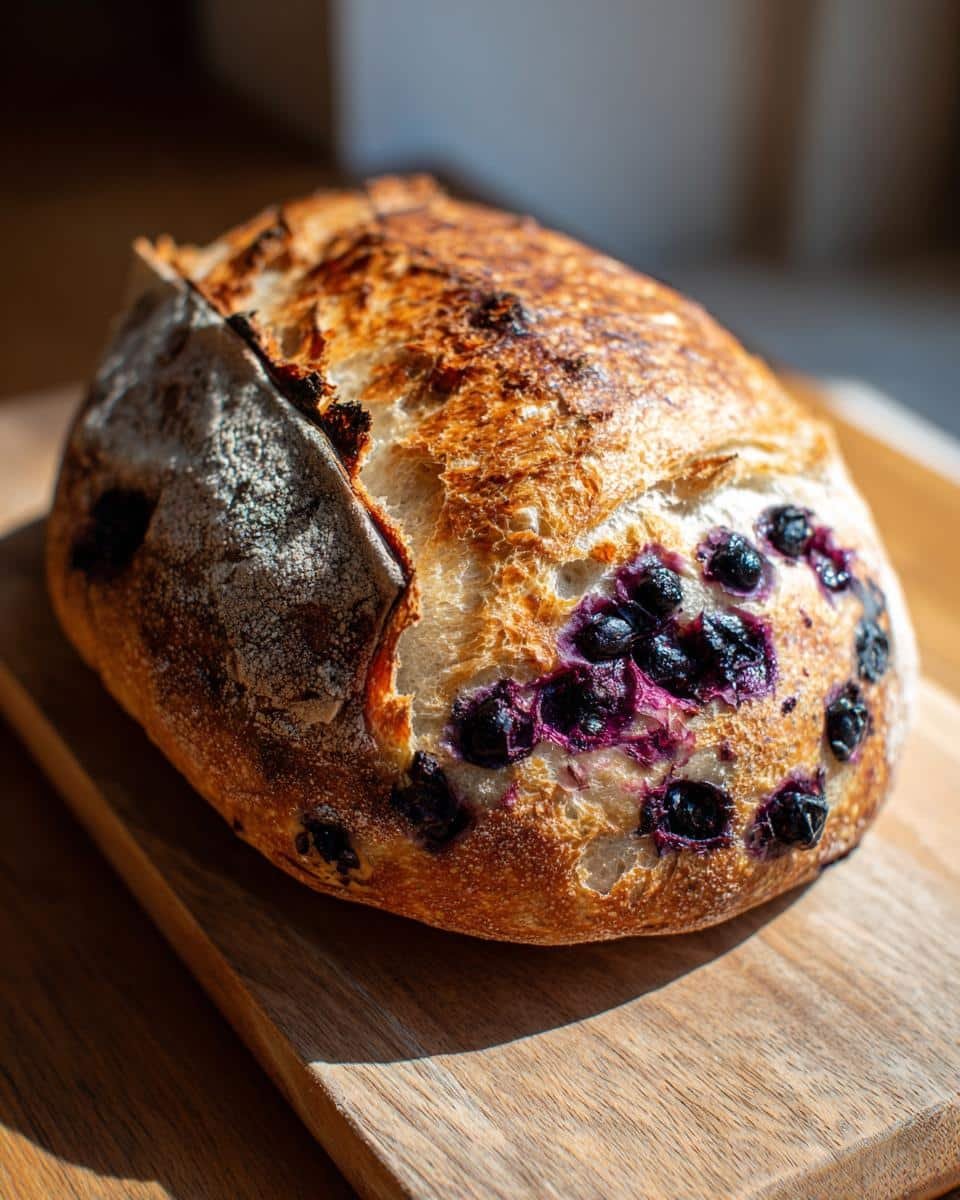
This recipe combines the best of both worlds: the complex flavor of slow-fermented sourdough and the natural sweetness of fresh blueberries. The long fermentation gives it that signature tang, while the berries burst with little pockets of jammy goodness in every slice. It’s become my go-to bread for weekend brunches and special breakfasts – my kids actually cheer when they see me shaping the dough!
What I love most is how the simple ingredients transform into something extraordinary. A good sourdough starter, quality flour, and fresh blueberries are all you need to create this artisan-style loaf at home. The process might seem intimidating at first, but trust me – once you taste that first warm slice, you’ll be hooked.
Why You’ll Love This Blueberry Sourdough Bread
Let me tell you why this blueberry sourdough bread has become my absolute favorite loaf to bake (and eat!). It’s not just bread – it’s an experience that hits all the right notes:
- That perfect tangy-sweet balance: The sourdough fermentation gives it that wonderful tang, while the blueberries burst with natural sweetness in every bite. It’s like having jam baked right into your toast!
- Simple, wholesome ingredients: Just flour, water, salt, starter, and blueberries – no weird additives or sugars. I love knowing exactly what’s in my bread.
- Artisan bakery quality at home: That crisp, crackly crust and open crumb will make you feel like a professional baker. Wait till you hear that first “crack” as it cools!
- Versatile enough for any meal: It’s equally amazing toasted with butter for breakfast, as part of a cheese board, or even transformed into the most incredible French toast.
The best part? Even if you’re new to sourdough, this recipe walks you through each step. My neighbor Janet – who swore she couldn’t bake bread – now makes this weekly after her first successful loaf!
Ingredients for Blueberry Sourdough Bread
Here’s exactly what you’ll need to make this magical loaf – and trust me, every ingredient plays a crucial role in creating that perfect texture and flavor. I’ve learned through trial and error (and many flat loaves!) that precision matters with sourdough.
- 500g bread flour (not all-purpose!): The higher protein content gives our loaf that beautiful structure and chewy texture. I like King Arthur or Bob’s Red Mill for consistent results.
- 100g whole wheat flour: Adds depth of flavor and a touch of nuttiness. If you don’t have it, you can use all bread flour – but the wheat makes it extra special.
- 100g active sourdough starter (fed and bubbly): This is your magic ingredient! Make sure your starter has doubled in size and passes the float test before using. Mine usually peaks about 4-6 hours after feeding.
- 350g water (room temperature): Cold water slows fermentation, while hot can kill your starter. I aim for about 75°F – it should feel slightly cool to the touch.
- 10g sea salt: Don’t skip this! It controls fermentation and enhances all the flavors. I prefer fine sea salt that dissolves easily.
- 200g fresh blueberries (tossed in flour): The flour coating prevents them from sinking to the bottom. Look for plump berries – frozen work too (see FAQ), but fresh give the best pop of flavor.
A quick tip from my messy experiences: measure everything by weight, not volume. My first loaf failed spectacularly because I “eyeballed” the flour. Now I keep my kitchen scale handy and measure everything precisely – it makes all the difference!
Equipment You’ll Need
Don’t worry – you don’t need a fancy bakery’s worth of equipment to make amazing blueberry sourdough bread! These are the absolute essentials I use every time (plus one or two nice-to-haves if you’re feeling fancy).
- Dutch oven: This is non-negotiable for that perfect crust. The heavy lid traps steam to give you that professional bakery “oven spring.” I use my trusty 5-quart Lodge – it’s lasted me years and costs way less than fancy enameled ones.
- Dough scraper: My hands-down favorite tool! The rigid plastic kind helps fold the dough without sticking to everything. I also use it to clean my work surface – sourdough can get messy fast.
- Proofing basket (banneton): That beautiful round shape doesn’t happen by magic! A 9-inch round banneton gives the dough support during its final rise. No basket? A well-floured bowl lined with a tea towel works in a pinch.
- Kitchen scale: Remember my flour disaster? Never again! A simple digital scale ensures perfect measurements every time. Mine was $15 and worth every penny.
Nice extras if you have them:
- A lame or razor blade for scoring – though a sharp knife works fine
- Thermometer to check water temperature
- Parchment paper for easy transfer to the Dutch oven
Here’s my confession: I made my first successful loaf with just a mixing bowl, wooden spoon, and Dutch oven. Don’t let lack of specialty tools stop you – focus on technique and that starter magic!
How to Make Blueberry Sourdough Bread
Alright, let’s get our hands floury! I’ll walk you through each step just like I do with my baking students – with all the little tricks I’ve learned from countless loaves (and yes, a few failures too). The key is patience and trusting the process – that sourdough magic takes time, but oh, is it worth it!
1. Mix and Autolyse (That Fancy Word for Resting!)
First, whisk your bread flour and whole wheat flour together in a large bowl. Add the water and starter, mixing with your hands or a wooden spoon just until no dry flour remains. It’ll look shaggy – that’s perfect! Cover with a damp towel and let it rest for 30 minutes. This autolyse (pronounced auto-lease) helps the flour fully hydrate and makes the dough easier to work with later. I use this time to prep my blueberries by tossing them with a tablespoon of flour.
2. Add Salt and First Fold
After the rest, sprinkle the salt over the dough. Now comes the fun part – wet your hands slightly and pinch the salt into the dough while gently stretching and folding. Do this for about 5 minutes until the salt is fully incorporated and the dough starts feeling smoother. You’ll notice it becoming more elastic – that’s the gluten developing! If it sticks to your hands, a quick splash of water helps.
3. Gently Incorporate Blueberries
Here’s where you need a light touch! Sprinkle about a third of your flour-dusted blueberries over the dough. Using wet hands, lift one side of the dough and fold it over the berries. Rotate the bowl 90 degrees and repeat until all berries are tucked inside. Wait 5 minutes, then add another third, repeating the folding. Do this once more with the remaining berries. This gradual addition prevents crushing and distributes them evenly. Some might peek out – that’s okay!
4. Bulk Fermentation with Stretch-and-Folds
Now we let nature do its thing! Cover the bowl and let it rest at room temperature (about 70-75°F is ideal) for 4 hours. Every 30 minutes, do a set of stretch-and-folds: wet your hands, grab one side of the dough, stretch it upward gently, then fold it over itself. Rotate the bowl and repeat on all four sides. This builds strength without heavy kneading. You’ll see the dough become smoother and more elastic with each fold. By hour 3, it should look pillowy with visible bubbles – that’s your sign it’s working!
5. Shape and Cold Proof
Lightly flour your work surface and turn out the dough. Shape it into a tight round by tucking the edges underneath – imagine you’re making a doughy umbrella! Place it seam-side up in a floured proofing basket (or a bowl lined with a floured tea towel). Cover loosely with plastic and refrigerate for 12-16 hours. This slow cold fermentation develops incredible flavor. I usually do this step before bed for fresh bread by lunchtime!
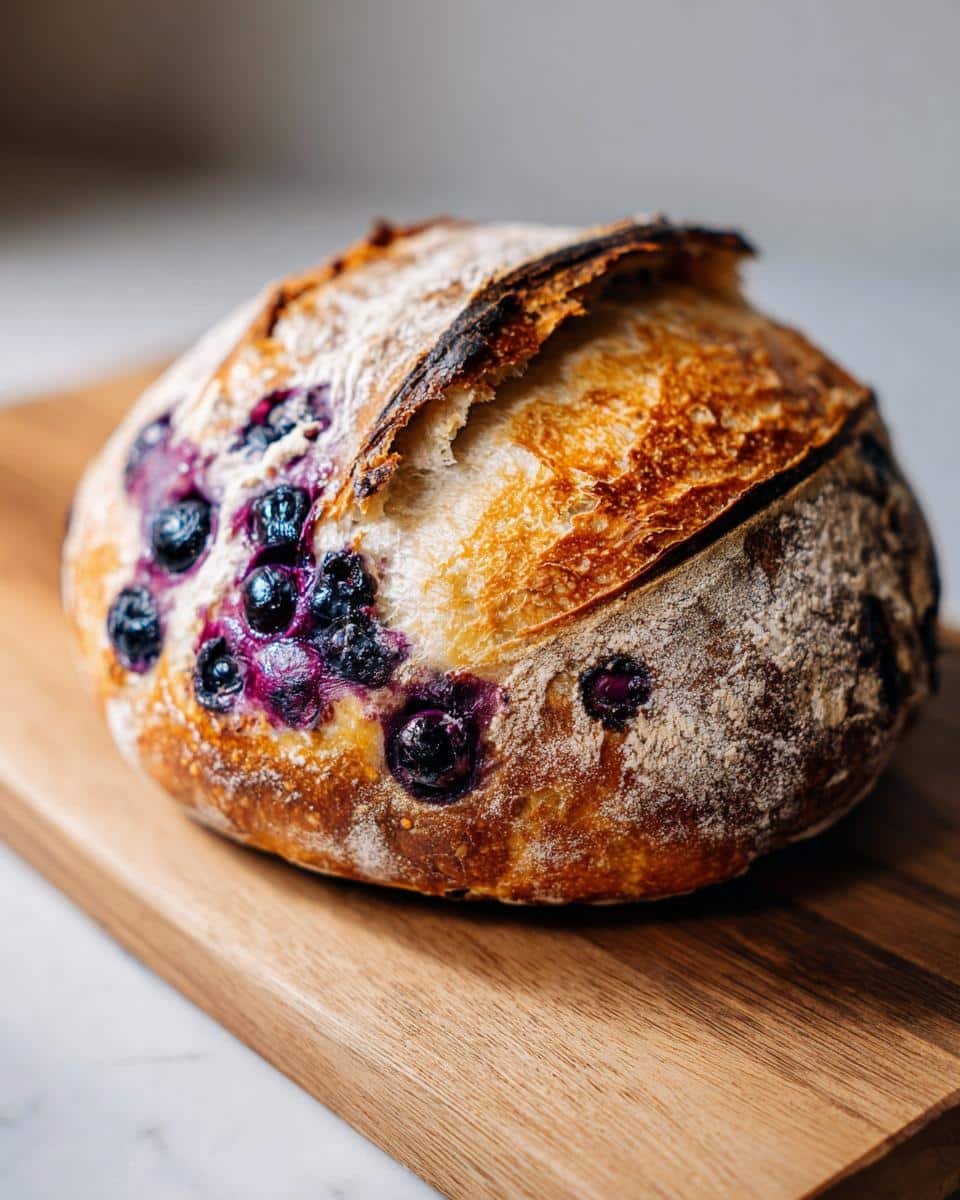
6. Bake to Perfection
Next morning, preheat your oven to 475°F (245°C) with the Dutch oven inside for at least 45 minutes – this is crucial for oven spring! Carefully remove the hot Dutch oven. Turn your dough onto parchment paper, score the top about 1/2 inch deep (I like a simple cross or spiral), then lower it into the pot. Cover and bake for 20 minutes. Remove the lid and bake another 25 minutes until deeply golden. That first crackling sound as it cools? Pure music!
Pro tip from my messy learning curve: Resist cutting into it for at least 2 hours! I know it’s hard, but that wait lets the crumb set properly. (Confession: I’ve burned my fingers more than once in excitement!)
Tips for Perfect Blueberry Sourdough Bread
After baking more blueberry sourdough loaves than I can count (and yes, a few flops along the way), I’ve learned some game-changing tricks that’ll take your bread from good to “oh my goodness!” Here’s what makes all the difference:
Flour those berries like they’re going to a fancy ball
That light dusting of flour on your blueberries? It’s not just for show! I learned this the hard way when my first batch had all the berries sink to the bottom, creating a purple sludge layer. Now I toss them in about a tablespoon of flour right before folding them in – just enough to coat without making the dough dry. The flour creates a barrier that helps them stay suspended throughout the loaf. If you see a few berries peeking through the surface after baking, that’s actually beautiful – like little flavor jewels!
Score with confidence (and the right depth!)
My early loaves looked like they’d survived a bread apocalypse because I was too timid with my scoring. Here’s the trick: use a razor blade or very sharp knife held at about a 30-degree angle, and make quick, decisive cuts about 1/2 inch deep. This gives the bread room to expand properly during baking. Too shallow, and your loaf might burst at weak spots. Too deep, and it could deflate. I like a simple cross or single slash – save the fancy designs for when you’ve mastered the basics!
That Dutch oven needs to be HOT
I can’t stress this enough – if your Dutch oven isn’t properly preheated, you’ll lose that gorgeous oven spring. I preheat mine for a full 45 minutes at 475°F (245°C) while my dough does its final countertop rest. And here’s my secret weapon: when transferring the dough, I use parchment paper “handles” to lower it safely into the scorching pot. No more accidental burns or misshapen loaves from fumbling with the dough!
Watch your bulk fermentation like a hawk
The biggest mistake I see? Rushing the bulk fermentation. Your dough should look lively with bubbles and feel airy when gently poked – about a 50-75% increase in size, not doubled. In my cool kitchen, this sometimes takes 5 hours. If it overproofs, your bread will spread flat instead of rising tall. When in doubt, do the “poke test” – a gently pressed finger should leave an indentation that slowly fills back in halfway.
One last piece of advice from someone who’s been there: don’t get discouraged if your first loaf isn’t perfect. My early attempts ranged from hockey pucks to oddly shaped blobs! Even now, every loaf teaches me something new. That’s the beautiful (and delicious) journey of sourdough baking. You can find more inspiration for your baking adventures on Pinterest.
Variations for Blueberry Sourdough Bread
Once you’ve mastered the basic blueberry sourdough, the fun really begins! Here are my favorite simple twists that keep things interesting while staying true to the spirit of the original recipe. These are all variations I’ve tested extensively in my own kitchen – some born from necessity (“Oops, out of fresh berries!”) and others from pure curiosity (“What if we added…?”).
Dried Blueberries for a More Intense Flavor
Ran out of fresh berries? No problem! I’ve had great success using 150g of dried blueberries instead. They pack a more concentrated blueberry punch and won’t add extra moisture to the dough. Just plump them up first by soaking in warm water (or orange juice for extra zing!) for 10 minutes, then drain and pat dry before tossing with flour. The texture turns out slightly different – more uniformly dotted rather than those juicy bursts – but still absolutely delicious.
Lemon Zest for a Bright Twist
For a citrusy kick, I love adding the zest of one large lemon when mixing the dough. The lemon’s brightness cuts through the sourdough’s richness beautifully. Pro tip: rub the zest into the sugar before adding to maximize oil release. My neighbor Karen calls this her “sunshine loaf” version! Just be sure to use unwaxed lemons and avoid the bitter white pith.
Swap in Other Berries When in Season
While blueberries are classic, don’t be afraid to experiment with other berries! Raspberries (tossed frozen into the dough) create lovely pink swirls, though they’re more delicate. Blackberries work wonderfully if halved first to prevent giant pockets. My summer favorite? A mixed berry version with whatever looks best at the farmers market – just keep the total berry weight around 200g. The dough might be slightly wetter with juicier berries, so add a touch more flour during folding if needed.
Cinnamon-Sugar Swirl for Extra Coziness
When I want to make this bread feel extra special for weekend brunch, I’ll sometimes roll in a cinnamon-sugar mixture during shaping. After the final stretch-and-fold, pat the dough into a rectangle, sprinkle with 2 tablespoons of cinnamon sugar (I do 1:4 ratio cinnamon to sugar), then roll up tightly before placing in the proofing basket. The swirl bakes up into sweet ribbons that pair magically with the tart berries.
Remember: the best bakers aren’t afraid to experiment! These variations all maintain the integrity of our sourdough base while letting you play with flavors. My only rule? Write down what you try – you’ll want to recreate the winners (and maybe avoid the disasters… like my ill-fated jalapeño blueberry phase).
Storing and Reheating Blueberry Sourdough Bread
Now that you’ve baked this gorgeous loaf, let’s talk about keeping it fresh – because nothing breaks my heart more than seeing good sourdough go stale! Through many trials (and a few tragic, rock-hard loaves), I’ve perfected these storage tricks that keep the bread tasting just-baked for days.
Room Temperature Storage (The Best First 3 Days)
For peak freshness, I store my blueberry sourdough cut-side down on a wooden board with a clean kitchen towel draped loosely over it. The crust stays crisp while the interior stays moist. Avoid plastic bags at first – they’ll make the crust soggy faster than you can say “sourdough!” In my experience, it tastes best within 3 days this way. If your kitchen runs warm, you might get 4 days max before it starts drying out.
Freezing for Long-Term Happiness
Here’s my freezer strategy that’s saved many a loaf from going to waste: once completely cooled, I slice the bread and place parchment paper between slices before bagging them up. This way, I can grab just what I need – no thawing a whole loaf! The slices toast up beautifully straight from frozen. They’ll keep for about 3 months, though mine never last that long because I’m constantly sneaking slices for midnight snacks.
Reviving Your Sourdough Like a Pro
Day-old sourdough? No problem! My favorite trick is to spritz the slice lightly with water before toasting – it brings back that fresh-baked magic. For frozen slices, I pop them straight into the toaster on medium-high (no thawing needed). If you’re feeling fancy, warm slices in a 350°F oven for 5 minutes wrapped in foil, then unwrap for 2 more minutes to crisp up. The berries get all jammy again – absolute heaven with a smear of butter!
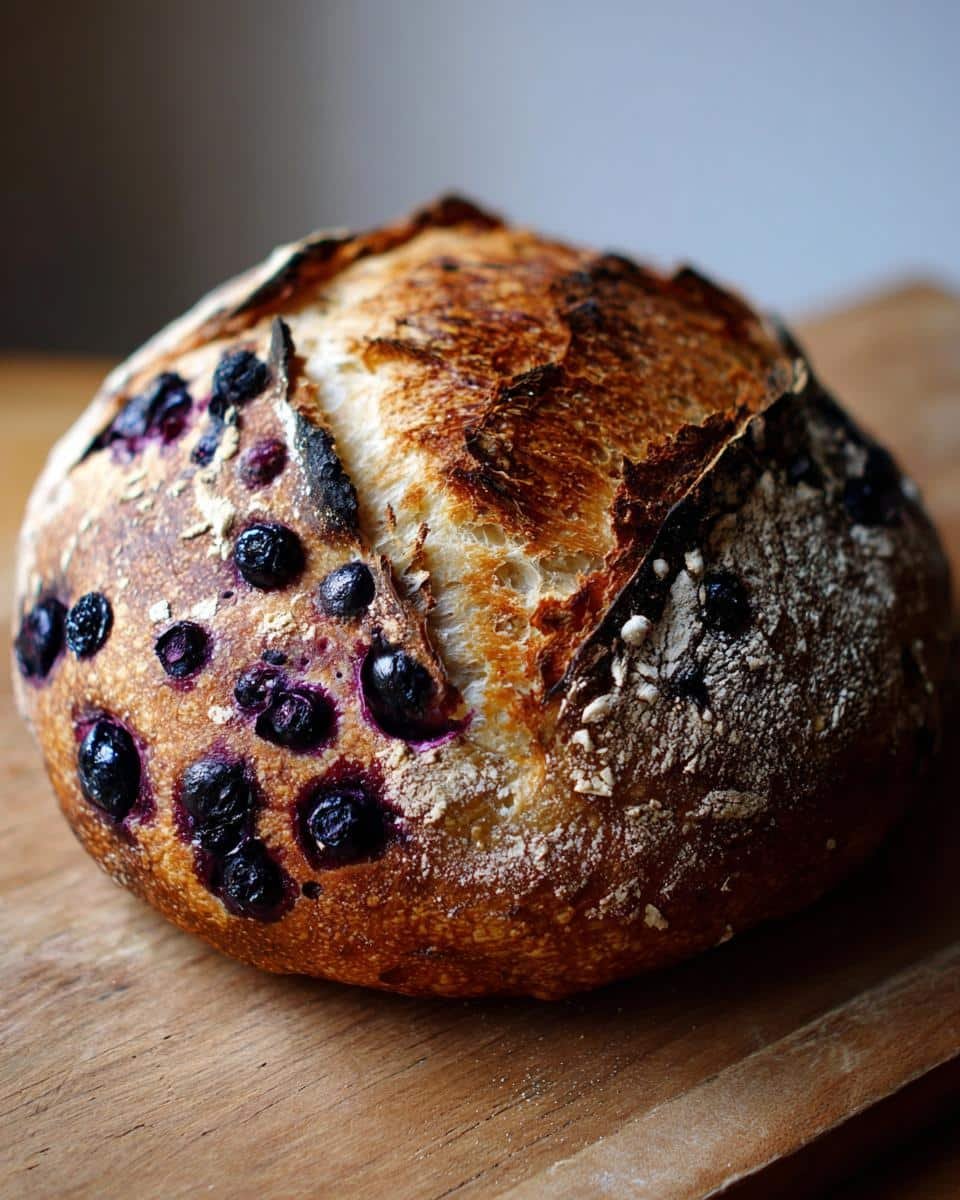
One last storage tip from my “learning experiences”: never refrigerate sourdough! The cold accelerates staling faster than you’d believe. I made that mistake once and ended up with something closer to a bread-shaped paperweight. Now I either enjoy it fresh, freeze it properly, or turn leftovers into the most incredible bread pudding or French toast. Waste not, want not!
Blueberry Sourdough Bread Nutritional Info
Let’s talk about what’s actually in this beautiful loaf – because I know many of you (like me!) care about what you’re putting into your body. Here’s the breakdown per slice (about 80g), based on my standard recipe. But remember what my nutritionist friend always says: “Nutritional values are estimates and vary based on ingredient brands.” So take these numbers as a helpful guide, not gospel!
- Calories: 180 – Perfect for that mid-morning snack with a cup of tea
- Carbohydrates: 35g – Mostly from the wholesome flours and natural fruit sugars
- Fiber: 2g – Thanks to the whole wheat flour and blueberry skins!
- Sugar: 4g – All from the blueberries themselves – no added sugar here
- Protein: 6g – More than your average white bread thanks to the bread flour
- Fat: 1g – Basically negligible, which means more room for butter!
- Sodium: 300mg – That sea salt does its job without going overboard
What I love most is how clean these numbers are – no weird additives or preservatives, just real food doing its nourishing thing. Compared to store-bought fruit breads that can have double the sugar and all sorts of stabilizers, this homemade version is a nutritional win in my book. And let’s be real – when it tastes this good, you’re getting joy calories too, which count for something!
Quick note: If you use different flours or add-ins (like my cinnamon-sugar swirl variation), these numbers will shift. That’s the beauty (and occasional frustration) of baking from scratch – every loaf is uniquely yours, nutritionally and otherwise!
Frequently Asked Questions
I get asked about blueberry sourdough bread all the time – and trust me, I had these same questions when I started! Here are the answers I’ve discovered through many batches (and a few delicious mistakes).
Can I use frozen blueberries?
Absolutely! I do this all winter when fresh berries aren’t at their best. Just thaw them completely first (overnight in the fridge works great), then pat them very dry with paper towels. The extra moisture is the enemy here – I learned that the hard way with a soggy loaf! Toss them in flour just like fresh, and fold them in gently since they’re more fragile when thawed.
How do I know when it’s proofed enough?
The “poke test” never fails me! Gently press a floured finger about 1/2 inch into the dough. If it springs back immediately, it needs more time. If the indentation stays, it’s overproofed. Perfect proofing? The dent should slowly fill back in about halfway. In my kitchen, this usually takes about 4 hours at 72°F, but your timing may vary – watch the dough, not the clock!
Can I skip the cold proof?
I don’t recommend it – that long, slow fermentation in the fridge is where the magic happens! It develops that amazing sourdough tang and gives the gluten time to relax for better texture. If you’re in a rush, you can do a shorter (3-4 hour) room temp final proof, but the flavor won’t be as complex. My emergency solution? Mix the dough in the morning for an evening bake, doing the bulk ferment at room temp and a shorter fridge proof (6-8 hours).
Why did my blueberries all sink to the bottom?
Ah, the classic blueberry bread dilemma! This usually happens if you didn’t flour the berries enough or folded them in too vigorously. Next time, toss them in an extra tablespoon of flour and add them in stages (like we do in the recipe). Some settling is normal, but they should be mostly distributed. Pro tip: if you see berries clustered at the bottom after baking, just slice the loaf horizontally for pretty berry layers!
My bread is too dense – what went wrong?
This breaks my heart because I’ve been there! The most common culprits are: underproofed dough (give it more time during bulk fermentation), overhandling the blueberries (squished berries release too much moisture), or not developing enough gluten (make sure to do those stretch-and-folds properly). My first dense loaf taught me patience is key with sourdough! If you’re looking for more general baking guidance, check out our full collection of recipes.
Remember: every “failure” is just a learning opportunity (and still makes great toast!). Keep baking, and soon you’ll develop that baker’s intuition – I promise it comes faster than you think!
Share Your Blueberry Sourdough Bread
Nothing makes me happier than seeing your beautiful blueberry sourdough creations! Every time I check my notifications and spot a new loaf photo tagged from one of you, I do a little happy dance in my kitchen. It’s like we’re all part of this delicious baking community, each putting our own spin on the recipe.
I’ve seen some stunning variations over the years – from perfectly scored masterpieces to charmingly rustic “first attempt” loaves that still make my mouth water. One reader even shaped hers into a heart for Valentine’s Day (genius!). Whether your bread turns out Instagram-worthy or wonderfully imperfect, I want to see it all – the good, the bad, and the deliciously ugly!
Tag me @[YourHandle] so I can cheer you on and share your baking wins. Your photos might just inspire someone else to take the sourdough plunge. And who knows – your unique twist could end up featured in my next recipe variation! Nothing beats learning from each other’s experiences in this crazy, wonderful world of bread baking.
P.S. My DMs are always open for your burning bread questions or proud baking moments. Some of my best recipe tweaks have come from reader suggestions – like the time someone recommended adding orange zest with the blueberries (game changer!). Happy baking, friends – can’t wait to see what you create!